
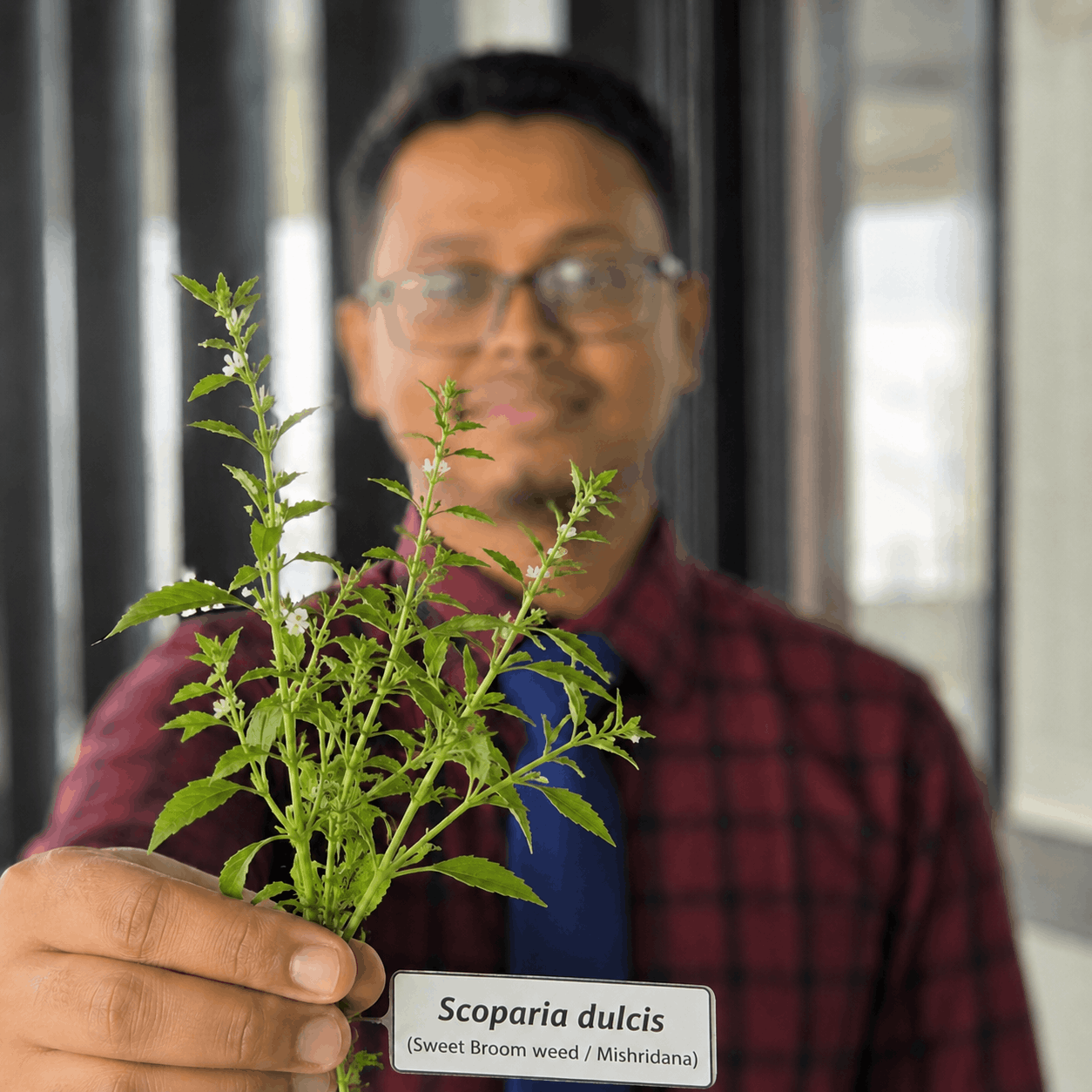

Mishridana/Chinipata (Scoparia dulcis) - A Traditional Medicinal Herb
(please do not consume without reading the entire information)
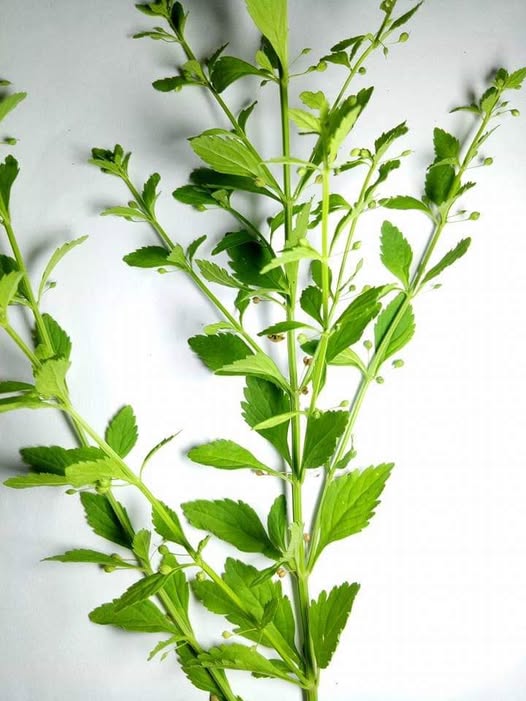
Scoparia dulcis L. is a medicine herb of the family Plantaginaceae. It is conventionally identified in the common English name goat weed, scoparia weed, sweet broom weed. In Bangladesh, it bears several names, like- Mishridana, Chinipata, Michripata, Midali, Chinitora, Bandhania, and Chinimitha.
This herb occurs widely in Bangladesh in the plains and hills. The most significant characteristics of leaves is sweet taste, which is reflected in few name, sweet broom weed and from this characteristics. Both fresh and dried plants are used in preparing few herbal medicine in a very long time. The different part of plants have been screened for biological activities: namely anti-diabetic, anti-inflammatory, anti-microbial, anti-ulcer, analgesic, and anti-sickling effect. It is natural that this plant is sweet in taste but for this to claim the leaves of Scoparia dulcis, the extracts which is 50 times sweeter than sugar and extract up to 200-300 times sweeter than sugar has to receive sufficient scientific verification so such comparative sweetness claims can not be identified as established scientific facts.
Traditional & Ethno-medicinal Uses
Scoparia dulcis has been used as a traditional medicine in some countries. It has been used as an anti-diabetic drug in India and is used as a traditional medicine for hypertension in Taiwan. It is used as folk medicine in Brazil and in Nigeria as an anti-sickling medicine. Bangladesh Ethno-medicinal surveys reported uses for diabetic, diarrheal, dysenteric, gastric troubles, ulcer and toothache diseases of this plant by several communities/area, traditional and indigenous communities. These results have significance in the traditional uses, but do not prove clinic significance of the plant, as well.
Scoparia dulcis in treating diabetes mellitus: Diabetes mellitus is a long-standing metabolic disease whose pathological consequences is as a result of either insufficiency in secretory capability of insulin, either insulin action, or both of the two. There has been significant scientific interested for Scoparia dulcis for treating this type of disease and research has shown different properties including lowering the blood sugar level in body or increasing the insulin secretion from the pancreas. Some compounds namely, amellin, scoparic acid, scutellarein, apigenin, luteolin, coixol and glutinol may be involved in mediating its pharmacological effects as anti-diabetic. The proposed mechanism has been documented which include inhibition of carbohydrate digesting enzymes, control of metabolic way, enhancing the secretion of insulin etc. Animal experimental shows its efficacy by reducing the blood glucose and raising insulin level in induced diabetic animal and also in limited human clinical study which showed the result of reduced fasting blood glucose as well as HbA1c upon chronic use (a randomized crossover study, was performed on 35 patients type 2 diabetic for Scoparia dulcis). But the trial was small and for relatively short period and has not sufficient data to advocate as replacement therapy for standard medical therapy of diabetes. Hence Scoparia dulcis could be a valuable complementary medicine for diabetes mellitus but conclusive proof would require more clinical pharmacology supported by robust evidence and clinical research trials in large scales.
Scoparia dulcis in treating dysentery: The usage of Scoparia dulcis for both diarrhoea and dysentery is well established in parts of South East Asia including Bangladesh. From some reports of Ethnobotanical surveys in Bangladesh, it is documented usage of parts of the plant by traditional medicine practitioner and indigenous community. The administration used are juice extract, decoctions, plant part extract etc. and in folk practice commonly 2-3 teaspoons leaf juice twice daily is to be taken but here the dosage required clinical assessment as its scientifically proven data regarding proper administration are inadequate.
Traditional & Folk uses in treatment of constipation: Also documented for constipation in traditional practice of Bangladesh. However, experimental proof against this traditional claim are scarce in nature and thus only possible candidate for as home medicine. It had also got to prove in its proper usage regarding the disease.
Traditional and other potential uses: Scoparia dulcis may has potential to heal any kind of wounds and also inflammation etc. From the various studies conducted it have been reported about biological activity like anti-inflammatory, anti-microbial etc. Although chewing the leaves of the plant would heal one's ulcers but there is still insufficient research to establish its potential in treating the ulcers, and medical check-up are required when dealing with chronic or recurring ulcers.
Potentials in treating hypertension: Traditional use is very well established as an anti-hypertensive treatment in Taiwan, and some other countries. Experimental results related to vascular activity and cardiac function is inconsistent. According to recent report the experimental findings have not yet produced enough prove and results in treating high blood pressure and even in experimental basis some extracts has been shown to raise it higher doses. So, Scoparia dulcis can not be suggested as treatment for hypertension and cannot be used as a replacement therapy without having strong clinical research trials data; however a proper guideline has to be established regarding dose for clinical studies.
Conclusion
Scoparia dulcis L. is an important traditional medicinal plant whose Ethno-medicinal properties are extensively known throughout the tropics and subtropical parts like Bangladesh. Some known effective biological activities of its different part include antidiabetic, anti-inflammatory, antimicrobial, antiulcer, analgesic and antisickling activities. From these activities anti-diabetic properties of the plant deserve mention as many scientific researches are reported in the same effect including limited human study. However, it does not provide scope to cite this plant as 'the cure of diabetes, hypertension, diarrhoea, constipation or ulcers'. For further confirmation, the researchers must include well designed controlled randomized clinical trials, pharmacokinetic studies, optimum dose finding researches in human, toxicity assessment, drug-drug interactions studies; thereafter, this plant can possibly be recommended as standard herbal drug.
Note: The plant has an established history of traditional use, as well as evidence from preclinical studies and promising indications of its potential effectiveness in lowering blood glucose, and treatment of high blood pressure, but needs clinical testing.
References
- Hossain et al. Antidiabetic Properties, Bioactive Constituents, and Other Therapeutic Effects of Scoparia dulcis. Evidence-Based Complementary and Alternative Medicine. 2016.
- Senadheera et al. Anti-hyperglycaemic effects of herbal porridge made of Scoparia dulcis leaf extract in diabetics: a randomized crossover clinical trial. BMC Complementary and Alternative Medicine. 2015;15:410.
- Latha & Pari. Studies on the antidiabetic effects of Scoparia dulcis in experimental diabetes.
- A review on the phytochemistry and pharmacology of the herb Scoparia dulcis L. for the potential treatment of metabolic syndrome. RSC Advances. 2021;11:31235–31259. DOI: 10.1039/D1RA05090G.
- Abere et al. Antisickling and toxicological evaluation of the leaves of Scoparia dulcis Linn. BMC Complementary Medicine and Therapies. 2015.
- Freire et al. Sympathomimetic effects of Scoparia dulcis L. and catecholamines isolated from plant extracts. Journal of Pharmacy and Pharmacology. 1996;48(6):624–628.
- Ethnomedicinal survey of medicinal plants used in Bangladesh. Studies documenting traditional uses of Scoparia dulcis for diabetes, dysentery, diarrhea, constipation, wounds, and other conditions.
- Traditional medicinal plant information from Taiwan Ministry of Agriculture. Scoparia dulcis L.
Md. Mostakim Islam
Pharmacist, Research Head (NFE Cell – Team Pharmastic)